The Real Conversation Monitoring Centers Need to Have
Dealers are already asking for remote guarding. That part isn’t complicated. The demand is there, and it’s growing. The complicated part is figuring out how to deliver it.
Most wholesale monitoring centers recognize the opportunity. Video monitoring creates new RMR streams, strengthens dealer relationships, and positions the monitoring center as more than just an alarm receiver. But when leadership sits down to map out what it actually takes to stand up this service internally, the conversation tends to shift.
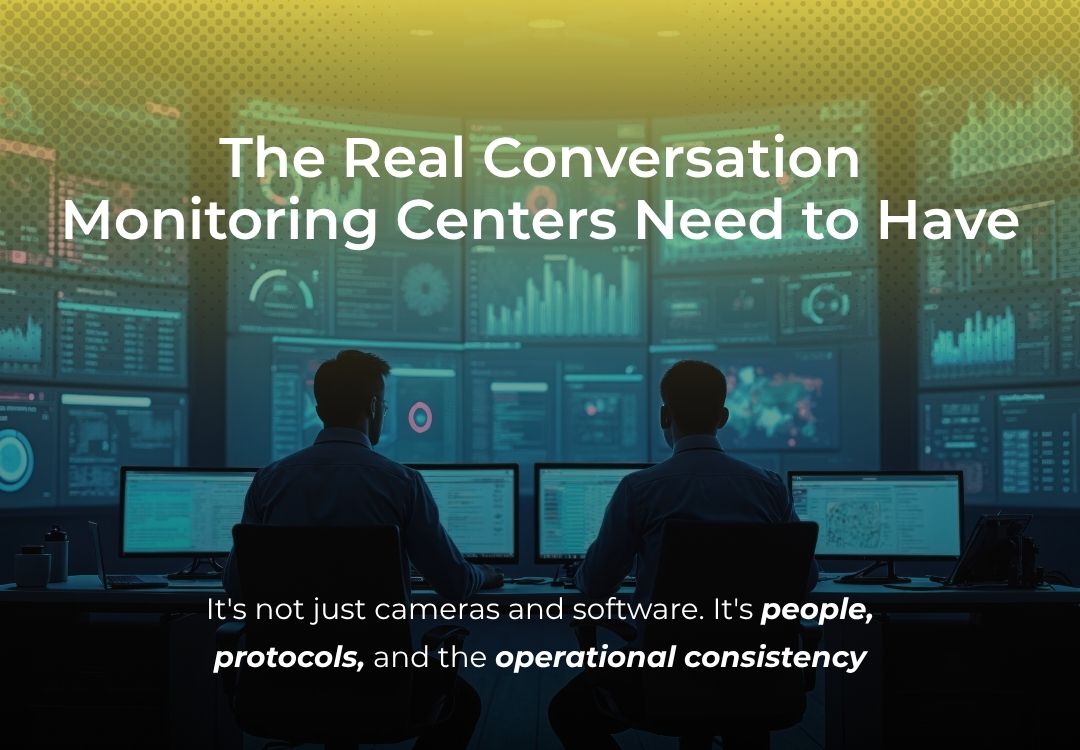
It’s not just cameras and software. It’s people, protocols, and the operational consistency required to execute at 2 a.m. the same way you execute at 2 p.m.
The Build-Out Reality
Standing up an in-house remote guarding operation requires investment across three areas that don’t show up on a simple equipment quote: infrastructure, staffing, and process development.
Infrastructure means more than monitors on a wall. It means redundant systems, secure connectivity, and a control room environment built for sustained visual monitoring rather than traditional alarm response.
Staffing means hiring, training, and retaining operators who can interpret live video, make judgment calls, and communicate clearly during escalation. This is a different skill set than alarm verification. And because remote guarding operates around the clock, you’re staffing for overnight shifts where fatigue management becomes part of the job.
Process development means building SOPs for every customer, because each site requires clearly defined response protocols. When an operator sees someone jump a fence at 3 a.m., what happens next? Do they voice down? Call a guard company? Contact the property owner? Dispatch law enforcement? That answer changes from site to site. Getting those protocols documented and trained into your team takes time.
Multiply that across dozens or hundreds of sites, and you start to understand why many monitoring centers stall at the planning phase.
What Dealers Actually Need
Dealers are primarily concerned with whether the service works reliably for their customers. They want to offer remote guarding, generate recurring revenue, and know that when something goes sideways at a site, the response is handled professionally.
That means the monitoring center’s job is to make activation simple. If a dealer has to become a video expert just to sell this service, adoption slows down. If onboarding a new site takes weeks of back-and-forth, dealers move on.
The monitoring centers that succeed with remote guarding tend to approach it as a partnership. The dealer handles the customer relationship and the installation. The monitoring center handles the operational execution. When those roles are clear, scaling becomes possible.
The Outsource Alternative
Some monitoring centers have decided the faster path is to partner with an outside remote guarding operation rather than build one from scratch.
Worldview Monitoring works exclusively through wholesale monitoring centers, operating behind the scenes under the monitoring center’s brand so dealers interact only with their monitoring partner. The model is white-label by design. The monitoring center maintains the customer relationship. Worldview provides the trained operators, the control room infrastructure, and the protocol-driven execution.
This approach lets monitoring centers offer remote guarding to their dealers without the capital investment, hiring challenges, or operational ramp-up that comes with building it internally. Pricing is structured so monitoring centers can quote remote guarding confidently while maintaining healthy margins. And because Worldview already operates remote guarding programs for monitoring center partners, the operational foundation is already in place.
The Right Fit Depends on Your Situation
There’s no universal answer here. Some monitoring centers have the resources, the appetite, and the strategic vision to build remote guarding in-house. Others would rather focus on their core strengths and partner with a specialist.
What matters is being honest about what each path actually requires. Building in-house means committing to infrastructure, staffing, training, and process development that will take time to mature. Partnering means trusting another organization to execute under your brand.
For monitoring centers exploring how remote guarding fits into their business, the first step is understanding what you’re really signing up for.
Worldview Monitoring partners exclusively with wholesale monitoring centers to deliver remote guarding designed for consistent execution. To learn more, call +1 800 912 2366