Ask someone about a successful Remote Guarding event and the conversation usually begins with what happened after an alert was received. Did an operator issue a live audio warning? Was law enforcement dispatched? Did the individual leave the property before any damage occurred? Those are the moments customers remember because they’re the visible part of the service. What they rarely see is how much of that response was shaped long before anyone stepped onto their property.
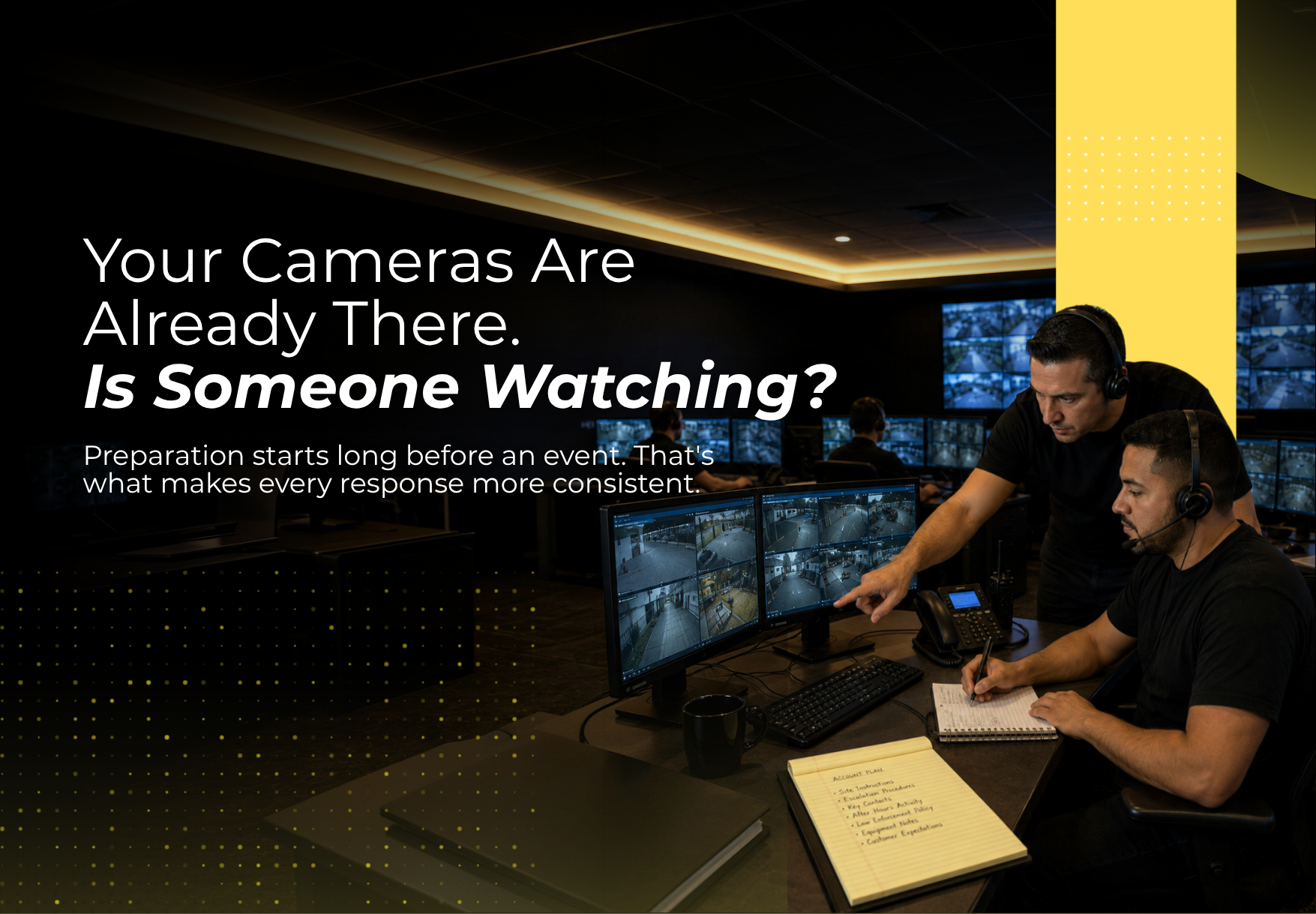
By the time an operator receives an alert, the important questions shouldn’t still be waiting for answers. Whether an audio intervention should happen immediately or the activity should first be verified, who needs to be notified, when law enforcement becomes involved, and whether employees are expected on-site after hours should already be established as part of the property’s monitoring plan. Operators should be focused on evaluating the event itself, not deciding how the property is meant to be protected.
One of the things we’ve learned at Worldview Monitoring is that the best Remote Guarding events rarely begin with the first alert. They begin weeks earlier, during conversations with the customer, while site instructions are being developed and expectations are still being established. Operators can only make confident decisions when those expectations have already been established. By the time the first alert reaches the monitoring center, the customer and the monitoring team should already share the same understanding of what a successful response looks like.
Every Property Has Its Own Definition of Normal
Commercial properties rarely operate the same way, even when they appear similar on paper.
Two warehouses may use the same camera system, have comparable layouts, and operate in the same industry, yet one expects overnight deliveries while the other should remain completely empty until morning. A construction site may want an immediate audio intervention the moment someone enters the property after hours. A manufacturing facility may expect operators to observe activity briefly before escalating because overnight contractors are common. Office buildings, schools, distribution centers, healthcare campuses, and retail locations all develop routines that make sense for the way they operate.
Those routines eventually become part of the monitoring process. Experienced operators aren’t simply reacting to movement, they’re evaluating activity against what should normally be happening at that location. Remote Guarding isn’t built around detecting motion alone. It’s built around recognizing when something no longer fits the normal rhythm of a property.
That understanding doesn’t come from a camera. It comes from preparation.
Every successful Remote Guarding response starts with clear expectations. Worldview Monitoring works with monitoring centers to develop site-specific procedures, operator guidance, and operational support that lead to more confident decisions when every second matters. Learn more at worldviewmonitoring.com/contact/ or call +1 800 912 2366.
Operators Shouldn’t Have to Guess
One of the easiest ways to slow a response is to ask operators to answer questions that should have been settled during onboarding. If someone enters a property after hours, there shouldn’t be uncertainty about whether a live audio warning should be issued, who needs to be contacted, or whether overnight activity is expected. Operators shouldn’t be searching for phone numbers, debating escalation procedures, or trying to determine whether a cleaning crew was scheduled that evening. Those answers belong in the account long before the first event occurs because every minute spent looking for information is a minute spent delaying a response.
Good site instructions don’t remove judgment from the process because no two events unfold exactly the same way. They remove unnecessary hesitation by giving operators the information they need before decisions have to be made under pressure. Customers experience the response itself. Operators experience the preparation that made that response possible.
Preparation Doesn’t End After Onboarding
Commercial properties rarely stay exactly the same for long. Managers leave, shipping schedules shift, gates are relocated, construction projects expand, and new vendors begin accessing the property after hours. Lighting changes, temporary fencing moves, and areas that once sat empty gradually become part of normal operations. None of those changes require a new camera system to affect the way a property should be monitored, which is why preparation can’t be treated as something that happens once during implementation before disappearing into a file.
A monitoring center that continues asking questions, reviewing customer procedures, and refining documentation over time is far more likely to deliver consistent responses than one relying on information gathered years earlier. The most dependable Remote Guarding operations aren’t built on perfect documentation. They’re built on documentation that stays current.
Good Responses Should Feel Routine
When an event is handled well, it can look effortless.
An operator receives an alert, evaluates the activity, follows established procedures, contacts the right people, and documents the outcome. From the customer’s perspective, the response appears smooth and well coordinated. That’s exactly how it should feel because customers rarely see the conversations that defined those procedures, the account reviews that kept site instructions current, or the planning that removed uncertainty before an event ever occurred.
Those things don’t happen during the response itself, but they shape every decision an operator makes once an alert arrives.
The best Remote Guarding decisions usually aren’t made while an event is unfolding. They’re the result of conversations, planning, and preparation completed long before the first alert ever reaches the monitoring center.
Remote Guarding is about more than responding to events. It’s about preparing operators to respond consistently before those events ever happen. Worldview Monitoring helps monitoring centers strengthen onboarding, documentation, and operational readiness so every response starts with a solid foundation. To learn more, visit worldviewmonitoring.com/contact/ or call +1 800 912 2366.