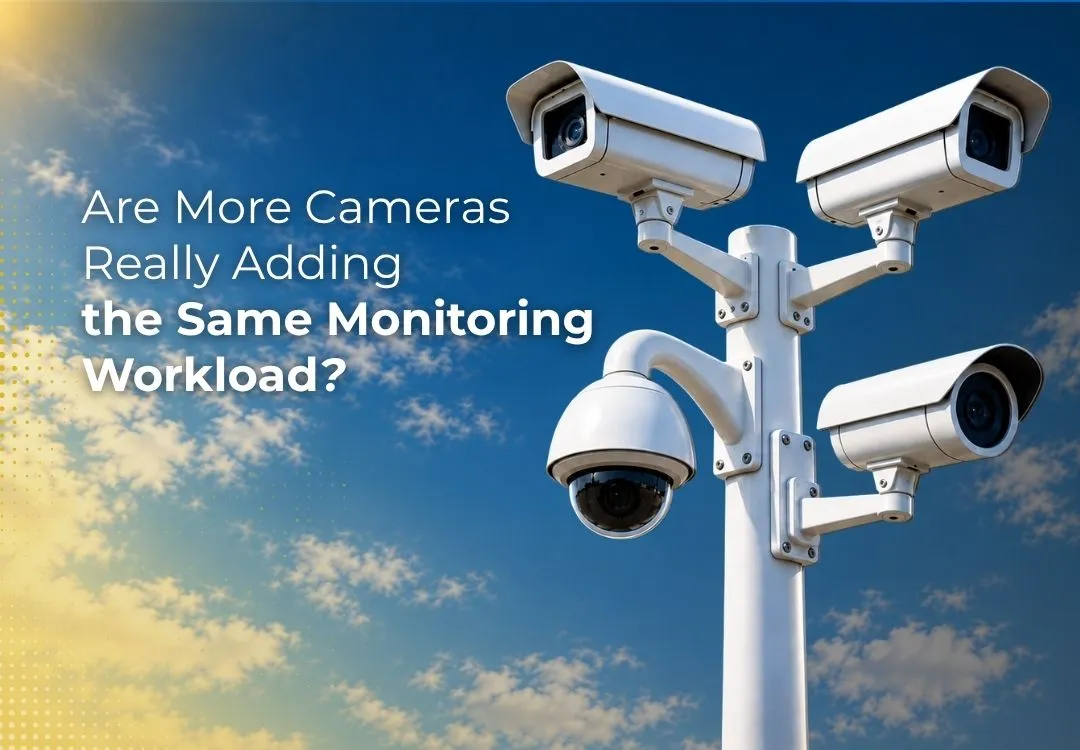
Camera count is one of the easiest ways to describe the size of a Remote Guarding program. A monitoring center adds new accounts, more cameras come online, and the total becomes a convenient measure of growth. Inside the monitoring operation, though, that number only tells part of the story. A camera covering a quiet perimeter after business hours may require very little operator attention on a typical night, while another overlooking an active loading area may see employees, contractors, delivery vehicles, and other authorized activity throughout the same period.
The same distinction applies across entire accounts. Two properties may have a similar number of cameras while producing completely different event volumes and requiring very different levels of operator involvement. For monitoring centers evaluating Remote Guarding capacity, the more useful question is not simply how many cameras are connected, but how much operator time and attention those cameras ultimately require. At Worldview Monitoring, that distinction shapes how we think about Remote Guarding capacity because the workload behind an account is ultimately determined by the events operators have to evaluate and manage.
Camera Count Doesn’t Tell You Event Volume
Once cameras are connected to a Remote Guarding platform, the amount of activity reaching the monitoring center depends heavily on the property. A facility that remains vacant overnight creates a different monitoring environment from a distribution center with regular truck traffic or a commercial property where employees and vendors routinely arrive outside traditional business hours. Analytics can help identify activity that meets established criteria, but the number of events requiring operator review will still vary from account to account.
Adding cameras at relatively quiet properties may have a modest effect on the monitoring floor, while a smaller deployment at a highly active site can introduce considerably more operator activity. The system may be capable of supporting a large number of cameras, but operational capacity depends on what those cameras produce once they are active and how much attention that activity requires from the monitoring team.
Event Volume Doesn’t Tell You the Whole Story Either
Even event count has limits as a measure of workload. Some events can be evaluated and resolved quickly because the activity is straightforward and the account procedures are clear, while others require an operator to spend more time observing what is happening, reviewing instructions, issuing an audio intervention, following an escalation path, or documenting the outcome. The amount of attention involved varies from one event to the next and is heavily influenced by the characteristics of the account itself.
A property with predictable operating hours and simple response instructions may generate events that are relatively straightforward to handle. Another account may involve multiple access points, authorized after-hours activity, changing schedules, and different procedures depending on where activity occurs. The workload includes everything the operator has to understand and do before the event is complete, which means two accounts producing similar event totals can still create very different demands inside the monitoring center.
If your monitoring center is seeing Remote Guarding volume increase, Worldview Monitoring can help support the work happening behind those cameras. To discuss your Remote Guarding operation, call +1 800-912-2366 or visit our site.
Operator Attention Is the Harder Number to Predict
Operator attention becomes a more revealing measure when thinking about Remote Guarding capacity because event activity does not occur in isolation. A monitoring center may have hundreds of cameras generating little meaningful activity during a particular period, while a much smaller group can produce events that require sustained observation, intervention, escalation, or documentation. What matters is not only how frequently those events arrive, but how much work is attached to each one.
That work also has to happen alongside everything else occurring in the monitoring center. An operator handling one event may still be observing activity when another account requires intervention or escalation, and several events that would be simple on their own can become more demanding when they require attention at the same time. Staffing assumptions based primarily on cameras or account totals can miss that reality because those numbers do not show how operator attention is actually being used across a shift.
The Mix of Accounts Matters
As a Remote Guarding portfolio grows, its composition can change just as much as its size. A monitoring center may begin with several relatively quiet commercial properties and later add accounts with more after-hours activity, more complicated operating schedules, or additional response requirements. Camera growth may appear steady while the amount of operator work increases at a different pace.
Two monitoring centers with similar camera totals can therefore have very different capacity requirements. The properties being monitored, the amount of activity generated, and the procedures operators are expected to follow all influence the workload behind the service. Understanding that account mix gives a monitoring center a clearer view of what growth is actually adding to the operation, rather than assuming each new camera contributes the same amount of work.
Capacity Should Follow the Work
Camera count still has value because it helps describe deployments, track account growth, and provide a simple picture of portfolio size, but it cannot tell a monitoring center how much work that portfolio is actually creating.
A more useful capacity review looks at questions such as:
- How much meaningful activity actually reaches operators?
- How long do different types of events require operator attention?
- Which accounts create the greatest workload?
- How often are multiple events competing for attention at the same time?
- How is the account mix changing as new Remote Guarding business is added?
Looking at those factors provides a better picture of the staffing and operational demands behind the camera total.
For Worldview Monitoring, Remote Guarding is built around supporting the monitoring operation behind the service. Our white-label model allows monitoring centers to expand their Remote Guarding capabilities while maintaining their own brand and business relationships, with Worldview providing monitoring support behind the scenes. More cameras may represent growth, but they do not automatically tell you how much capacity that growth requires. The events those cameras generate create the work, and the monitoring operation has to be prepared to handle that work when it arrives.
If your monitoring center is evaluating how to expand Remote Guarding without building additional capacity account by account, talk with Worldview Monitoring about how our white-label model can support your operation. Call +1 800-912-2366 or contact us online.